- Leadership Definition
- Importance of Leadership
- Performance of a Leadership
- 1. Have a Positive Thought
- 2. Be Honest
- 3. Know-How to Delegate
- 4. Encourage Good Communication
- 5. Inspire the Group
- 6. Establish Strategies for a Balanced Life
- 7. Align the Team
- 8. Give Credit When Appropriate
- 9. Appreciate the Achievements
- 10. Encourage Growth
- 11. Be the Guide
- 12. Encourage Good Habits
- 13. Maintain a Neutral Position
- Types of leadership
- 1. According to Max Weber
- 2. According to the Formality of your Choice
- 3. According to the Relationship with his Followers
- 4. According to the Influence it Exerts on the Followers
- Examples of Leadership
- Conclusion
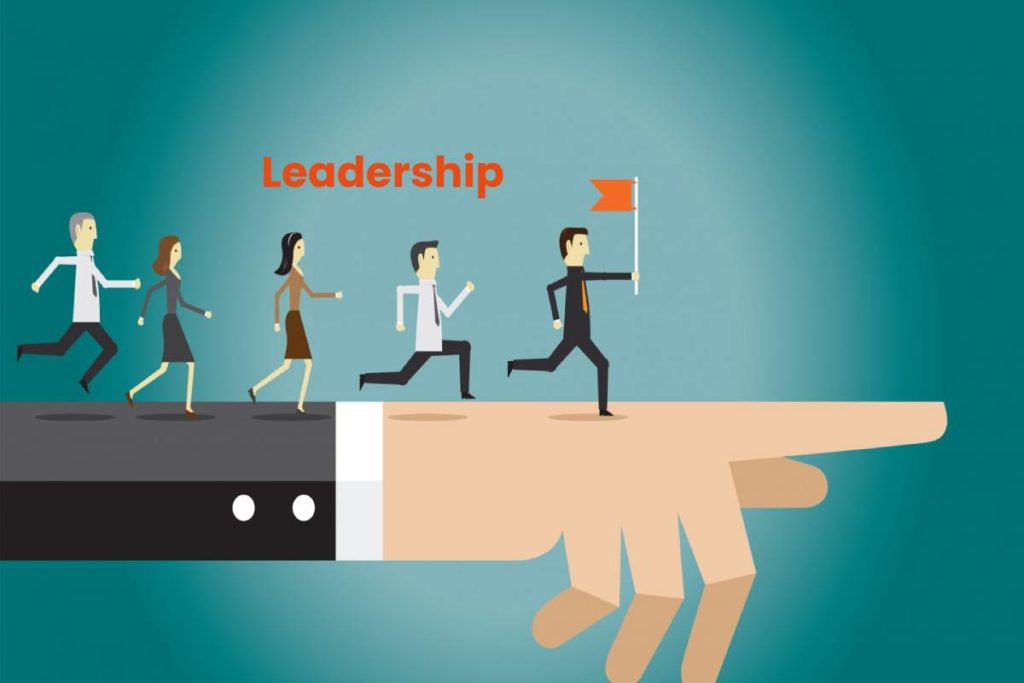
Leadership Definition
Leadership is the usual skills that serve to affect the way other people think or act. However, this period should not focus on anything other than changing people’s minds.
Because a leader also can take the initiative and provide innovative ideas and not just give orders. Nor does leadership equate to an unequal distribution of power.
And even if the leader has the last word, it is teamwork that gives the best results. If you want to go fast, walk alone. If you’re going to go far, walk together” (African proverb).
Additional Information: https://www.knowaboutanything.com
Importance of Leadership
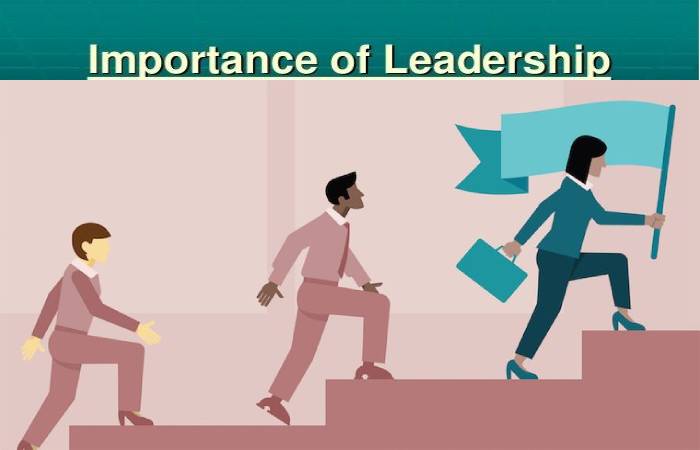
The importance of leadership is more than evident in many areas of life, even beyond business it. The leader is accountable for achieving the objectives in a much more effective and faster way.
Leadership is not flat, and depending on the context in which it develops, it can determine the kind of social transformation of which it is capable. Therefore, it has a function within the organization, community or society that stands out for its relevance and influence.
It is how organizations depend on leadership to grow and endure; its great importance lies. A leader will establish good communication and improve the members’ integration capacity to achieve a common goal.
Leadership can also be interpreted as a way of being, directing and seeing how things shape over the years. It is a process of interaction between the members of a group interested in the organisation’s progress for which they work.
In short, the rank of leadership lies in the fact that it is the key to any organisation’s survival. More if it is taken into account, knowing how to guide and direct is its centre.
For example, an organization may have optimal control, proper planning, first-rate resources. It will not be able to survive the lack of a leader who is appropriate for its goals.
Performance of a Leadership
It fixes not substance if you are at the top of a large company or a small group of people in your charge. There are particular abilities of a leader that cannot underestimate. These skills are responsible for promoting and producing the best changes in an organization.
It is how these are the qualities that every great leader should demonstrate to take their position to the highest level of performance:
1. Have a Positive Thought
- Of all the characteristics of a leader, perhaps being positive is one of the most essential.
- By understanding the potential of positive psychology, you will understand the best way to implement learning in any situation that arises.
2. Be Honest
- Truth should always be a leader’s greatest weapon.
- While reality can often be painful or annoying, hiding certain things can complicate many situations.
3. Know-How to Delegate
- A leader cannot do everything alone. Thinking this is unrealistic.
- So a good leader needs to leave alone and trust his collaborators so that teamwork is efficient.
4. Encourage Good Communication
- Lack of communication is responsible for the failure of many operations in companies.
- So incentivizing a useful one is one of the most sensible ways to cultivate success.
5. Inspire the Group
- A group will be discouraged if faced with a lack of motivation.
- The role of the leader is designed, in part, to inspire and transmit passion to its employees.
6. Establish Strategies for a Balanced Life
- A person who lives only to work will never give 100% of what he can at work. This because it will lack energy.
- Instead, those people who strike the right balance can increase their productivity at significant levels.
- It is how a leader must ensure that his team can live a proper balance between their work, personal or social life.
7. Align the Team
- A team must focus on a long-term goal (mission) but on setting achievable short-term objectives. The leader is again in charge of this task.
8. Give Credit When Appropriate
- People who do their job well or reach goals should be rewarded, give them credit to feel motivated, and increase their confidence.
9. Appreciate the Achievements
- For a leader to appreciate achievement, it does not have to be a colossal one, but those small achievements must also recognize.
- Even if it is small or modest, it is good to do this.
10. Encourage Growth
- A good leader must foster the professional and personal growth and development of his employees.
- As a consequence, you will be intelligent to increase work productivity.
11. Be the Guide
- A leader should never act like a boss, much less exert influence using power and intimidation as the main tools.
- You have to know how to differentiate between guiding and imposing.
12. Encourage Good Habits
- For a successful project, its employees must also be happy and productive, and the key is to promote good life habits.
- Help them always have a healthier and more stable life.
13. Maintain a Neutral Position
- Favouritism should not exist in a healthy work environment, much less on the part of the leader.
- It is why one should always focus on showing that all employees are treated equally, without distinction.
Types of leadership
The charismatic leader manages to enthuse the group and chose for that.
Some experts argue that leadership is only one and that, as leaders are people with different characteristics, that makes them different. Others claim that there are various types of leadership with different parts.
1. According to Max Weber
Charismatic leader: He excited people and chose that; he believes more in himself than his followers.
Traditional leader: He inherits power, generally because he belongs to an elite family group or social class
Legitimate leader: Acquire power through legal paths; he is the opposite of the “illegitimate leader” who gains power through illegal means.
2. According to the Formality of your Choice
Formal leader: He is elected as the leader in a group or organization and has the authority to mete out punishments or give rewards, make decisions, and guide the group.
Informal leader: He not directly elected as a leader, so he does not have authority, but follow by the rest of the group members for his charisma and motivation.
3. According to the Relationship with his Followers
Dictator leader: It imposes its authority and decisions without leaving room for dialogue; force their ideas and points of view to the group.
Autocratic leader: He has the power of decision over the group and guides the way forward without allowing the rest of the team members’ participation.
Democratic leader: Encourages the participation of group or team members to make joint decisions, respects others’ opinions, and delegates tasks.
Onomatopoeic leader: It guides the group and motivates through onomatopoeia to generate enthusiasm and retain members.
Paternalistic leader: He makes the decisions, and establishes the way forward, works based on results. It imposes a system of rewards and punishments to incentivize the members.
Liberal leader: He leaves the power of decision and fulfils the members’ hands’ functions since he trusts the team and supports.
4. According to the Influence it Exerts on the Followers
Transactional leader: Seeks the fulfilment of the team members’ tasks through a system of rewards and punishments.
Transformational leader: Motivates followers and focuses on them and their potential to achieve the organisation’s expected changes. He is a leader who believes in his team and forms bonds with its members.
Authentic leader: Learn about their strengths and weaknesses, share their opinions, thoughts, and feelings, and listen to those of other group members. He is a balanced leader who seeks diverse views before making decisions.
Lateral leader: He has experience in the position in which he works and leads a group without being a boss; he stands out for his power to motivate, communicate and guide the group.
Longitudinal leader: He uses the authority and power that comes from having a hierarchical position that of his followers.
Examples of Leadership
1. Mahatma Gandhi (1869 – 1948 )
- Indian attorney and politician led a peaceful struggle to liberate India from the British Empire. He stood out for his defence of world peace, peaceful resistance and non-violence.
2. Winston Churchill (1874-1965)
- British politician ruled as Prime Minister of that country. His excellent command of public speaking and the power of motivation made him a positive leader who delivered a hopeful message to all the English people during World War II.
3. Martin Luther King (1929-1968)
- American pastor and activist-led a movement for the rights of African Americans in the US. He is considered a leader for his oratory and supports his message of non-violence and fight for equality had.
4. Nelson Mandela (1918 – 2013)
- South African lawyer and politician fought against racial discrimination in his country and the apartheid regime (system of racial segregation) instituted by white minorities. And also, he was in custodial for 27 years and ruled the country as president between 1994 and 1999.
5. Malala Yousafzai (1997 -)
- Pakistani activist and student fights to defend women and girls’ rights and access to education in her country and the world. In 2014 he became the newest person to win a Nobel Prize.
Conclusion
A leader is also one who has characteristics that make him a famous person or who commands respect, stands out among others and has qualities that give him superiority to play a role. The leader excels in some aspect (title, experience, knowledge, performance) and is usually a role model for his peers’ rest.