- What is a Commercial Proposal?
- Tips to Make Commerical Proposal
- 1. Be Concise
- 2. The Price, as Soon as Possible
- 3. Deliver Results
- 4. Offer Several Options
- 7 Steps to Writing a Successful Commercial Proposal
- Step 1: Keep a Sense of your Competitors
- Step 2: Before Sending any Commercial Proposal, do your Research Before your Future Client
- Step 3: Structure of your Commercial Proposal
- Step 4: In any Business Proposal, be the Solution, Not the Problem
- Step 5: Convince your Potential Client that they Need your Help
- Step 6: Share in your Business Proposal on how your Solution can Solve its Problem.
- Step 7: Your Benefits and Costs
What is a Commercial Proposal?
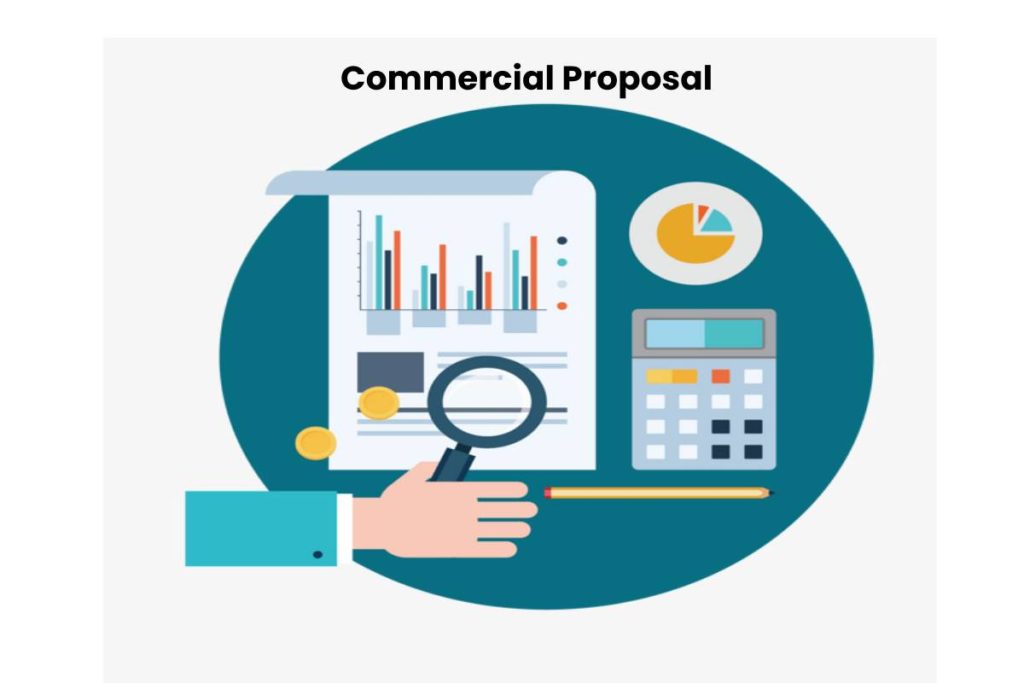
The commercial proposal is a file in which one person (either physical or legal) proposes another (also physical or legal) a plan or submission of the crops and services it has for sale.
It focuses on presenting the points that the seller considers most significant to the customer, who will value them and, based on them.
It will decide to accept the proposal and buy the product or, otherwise, assume that of another competing company.
The commercial proposal is a text where a usual or legal person offers a product or service to its possible client, specifying elements such as price, delivery times, explanation of technical characteristics, etc.
Tips to Make Commerical Proposal

Thus, we detail four tips to make a commercial proposal :
1. Be Concise
- We don’t bore our clients with technical details. The important thing is to define the price well and not take the person with unnecessary information, which can deal with at another point in the auction process.
2. The Price, as Soon as Possible
- Let’s not kid ourselves. In short, it will be the first thing that interests us as customers. So, better evade putting the price at the end of the commercial proposal.
3. Deliver Results
- Instead of focusing on our product or service’s benefits, it is convenient to tell the client what benefits they will get from its use.
4. Offer Several Options
- If we give only one option, we risk everything to a single card. However, by providing, for example, three possibilities, the customer is given more freedom to choose, and it gives us the chance to offer higher-end crops.
- We can use invoicing programs to generate it, or we can easily create the company’s commercial budget with Excel. It is essential to have a tool that allows us to generate as many accounts as we need and streamlines the entire process.
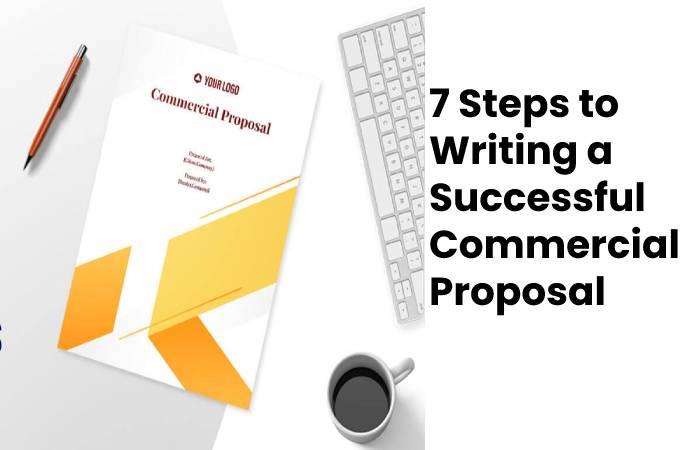
7 Steps to Writing a Successful Commercial Proposal
Step 1: Keep a Sense of your Competitors
Remember this: In the commercial, there are no enemies, only competitors who are your best friends because you learn valuable things from them.
But why should you monitor them? Because they are already familiar with things that you may not know, such as:
- A) People you are addressing, their interests, most common behaviors, needs, and challenges,
- B) Different approaches and sales strategies that give results for your company,
- C) How to create engaging content, or even make great business propositions,
If you are writing a business proposal for the first time, tracking your competition is crucial because you will get new thoughts on approaching your potential customers.
You can also find out what your unique value propositions are that they are presenting to your potential customers.
It helps you create better business proposals with significant competitive advantages.
You can do this in three ways:
Sign up for their Newsletters
- It helps you understand the different acquisition, retention, and education methods your competitors are using (Maybe you can even find relevant resources that are sure to mention some of the weaknesses of your prospects or their needs).
Follow their Social Media and Posts
- It will help you understand the topics they are focusing on, giving you an idea of the benefits and value they are projecting to their board audience.
Check your Website Regularly
- Keep a close eye on any changes to your website like keywords, CTAs, etc. It helps you understand the words that resonate with your audience. For example, your competitors create that people who write “How to manage customers” instead of just putting “How do I get a CRM” are more likely to buy your services, so they decided to target different keywords.
- By carefully monitoring your competitors, you can better understand your target audience and find useful devices for acquiring new customers and writing business proposals for your company.
Step 2: Before Sending any Commercial Proposal, do your Research Before your Future Client
- Always be ready and do your homework on time.
- Now that you know some things about your target audience and your competitors you didn’t know before. But that is not enough.
- Research your potential client before submitting your business proposal.
- Besides knowing your company’s history, service, or product, and understanding your mission and objectives, ask yourself the following questions, and write the answers.
- What are my potential client’s most significant needs and problems?
- What solutions did they use before? (If you can get it, better! because this can be very useful)
- How can I help you understand your needs and problems? (Most of the time, people are only half aware, or perhaps not aware of their problems)
- How does my solution help you solve your problems?
- Will they achieve the desired results?
- Can I convince you that I am the best person for the job and how?
- What would be my method and solution to your problem?
- What are the assistances of my product/solution?
- Of course, these are some of the basic questions you can ask yourself. You can even add more to the list, and when you know the answers to each answer, you can:
- Create highly personalized business proposals that correspond to your needs and problems, dramatically increasing your chances of making a deal.
- Whether it’s an alive or video sales meeting, you’ll be prepared and able to answer all their questions with confidence.
Step 3: Structure of your Commercial Proposal
A well-defined structure is what differentiates you from a good sales proposal from a bad one.
Your proposal’s structure should be easy to read, without too many paragraphs and too much text. Try to keep it simple, straightforward, and as short as possible.
Of course, your business proposal must contain some essential parts:
Introduction
Introduce yourself, your team, and what your product/solution is. You can also add what your current clients are (if you have them) and their testimonials, to create trust and credibility.
Discussion
Describe your potential customer’s business challenges and needs and what can happen if they can’t resolve them quickly.
Focus
Define your approach to the existing business challenge, with objectives and milestones. You can also briefly label the methodology you will use. It is best not to reveal all the information and leave something to talk about when you meet with the prospect to close the contract.
Benefits
Convince your potential customer of how they will benefit from your solution. This part is vital because you are not selling them your answer. You are selling them your value. It shouldn’t sound aggressive or 100% commercial.
Recharge It
Clearly define the cost of your key from high to low. Also, include any additional costs that the view may incur, such as installation or consultation costs.
End of Business Proposal
Remind your potential client why you are the best option and briefly describe your solution’s benefits, or in other words, place your sales pitch towards the end of your proposal.
Step 4: In any Business Proposal, be the Solution, Not the Problem
The outline is one of the vital parts of every business proposal.
It is where your potential customer will assess whether your solution can help solve their business challenge.
The vital part here is that you essential to convince them that you have the experience to deliver the best work on time and that your solution can help solve your prospect’s business challenges.
In the introduction, briefly explain your company, how your product or service is the solution, your customers, and their testimonials.
Keep this section short and sharp. Don’t write too much about by hand or your company as it can sound very annoying.
Here’s an example of an excellent introduction to a business proposal :
- “Hello X,
- How are you? I do not take any of your time because I am sure you receive a lot of emails.
- I am “your name,” I do not know if you have me registered, I do to you, because of your (product or service) that catches my attention since (it gives value to why what they do or sell catches your attention)
- To give you more information about me, I have created a (product or service) called X. This has come to benefit more than X amount of users and different clients recommend it because it has helped them in X. “
- When you mention your current customers, be sure to mention those who share the same pain points, who are the same size as the company, or in the same industry as your prospect. It will help build trust and credibility.
- A crucial point to remember in the introduction is that you never let your potential customer feel superior to you.
Avoid phrases like:
- “We are very grateful for letting us present you our commercial proposal.”
- or
- “It is a great honor to speak with a great businessman like you.”
- You are the expert. Always present by hand as an expert in your field and industry. That way, people will appreciate and trust you more.
Step 5: Convince your Potential Client that they Need your Help
- In general, people are not aware that they have a challenge in their business or that some of their processes can be cheaper and faster.
- Your mission here is to make them understand that the business challenges they have, be it long term or short term, in detail.
- Talk to your potential client about what can happen if they don’t solve their problem.
Step 6: Share in your Business Proposal on how your Solution can Solve its Problem.
- This step is significant in any commercial proposal.
- It is where your potential customers will see if you can solve their problems and deliver results on time.
- In this step, you need to explain your main objective and milestones and what they can expect from your solution.
- Here is an example of how a marketing company can explain in detail in its commercial proposal each step to execute:
- “In the first month, we will make social media channels and start generating content and campaigns.
- Second calendar month, we will start with rewarded promotions to redirect users who have left items in their sales cart but have not made a purchase.
- In the third month, we will last with paid promotions and begin to build a newsletter list.
- At the finish of the 3rd month, you can imagine a 50% increase in sales. “
- You also want to explain your tactics and methods and how you will attain the desired results. Don’t disclose all the cards here.
- Lean on your sales team to execute this type of process and save some information when you meet with your client.
Step 7: Your Benefits and Costs
- Your potential customer must understand your product or service’s benefits and unique value.
- Remember that you are not selling them your time or knowledge. You are selling your value to them, them a chance to be successful.
- You are selling them an occasion to be more profitable and efficient.
- When you think about auctions in this way, you will get healthier conversion rates and, of course, an increase in your income.
- Another aspect that is important in any business proposal is pricing.
- Always save the price for last: first explain the problems, approach and convince them that they need your product or service, and then discuss the price.
- Be sure to explain your plans and pricing in detail. If the project is large, you can gulf it into stages for a more comfortable solution.
- Remember that everything must be robust and transparent: there are no hidden costs, or your reputation will suffer. You will lose a customer, and probably more.
- When explaining the price, be sure to start from your highest plan and then present your lowest project.
- Start creating your business proposal and convert opportunities into sales.
- When making a business proposal, following the seven steps above shouldn’t be difficult. Try it on your next proposition.